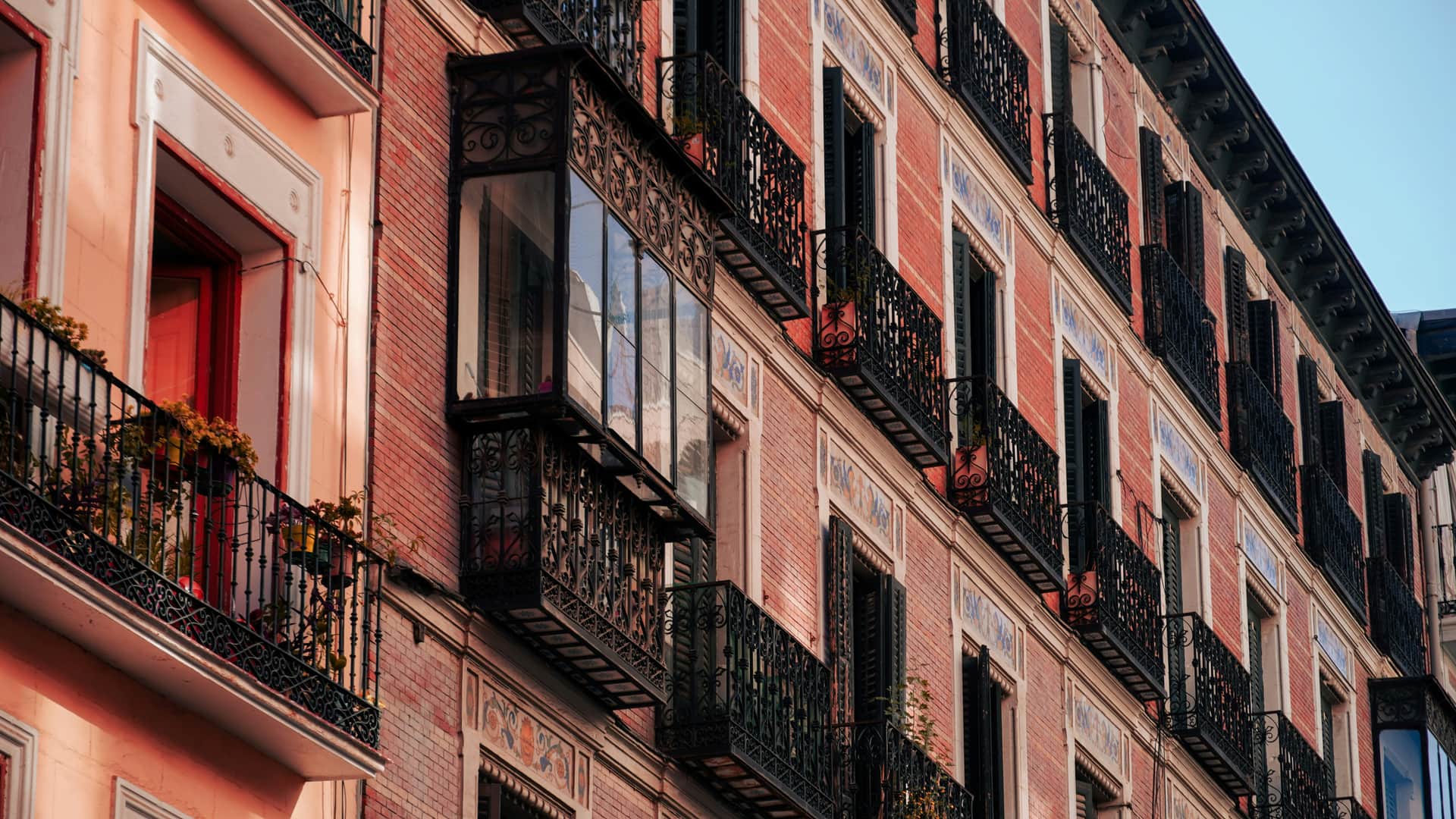

Madrid vs Barcelona: Where Should You Invest in Real Estate in 2026?
Madrid vs Barcelona: Where Should You Invest in Real Estate in 2026?
You have the budget, the NIE is nearly sorted, and you keep hearing the same debate: Madrid or Barcelona? Pick wrong and you could lock capital into a city where rent controls cap your yield or where prices have already peaked. This is the honest, numbers-first comparison most agencies avoid giving you.
Both cities are world-class. But for a foreign investor chasing capital growth, cash flow and legal peace of mind, they are not equal. Let's break it down.
The price gap: what your euro actually buys
Here is the first surprise. On the city-wide average, Madrid is now slightly more expensive than Barcelona (around €5,980 vs €5,150/m²), and Madrid's prime district (Salamanca) is the single most expensive in either city.
Rough central averages for 2026:
- Madrid prime (Salamanca): ~€10,000/m², the most expensive district, record high in early 2026.
- Madrid upper-tier (Chamberí, Retiro): €7,000-8,000/m².
- Madrid central (Chueca, Malasaña): €6,000-8,500/m².
- Madrid mid-tier (Arganzuela, Tetuán, Lavapiés): €4,500-6,000/m², already strongly revalued.
- Madrid value plays (Carabanchel, Usera, Puente de Vallecas): €3,300-3,900/m², where genuine upside remains.
- Barcelona prime: Eixample ~€6,200-7,300/m², Gràcia lower (~€5,400). The true top of the market is not the seafront but the hills: Sarrià-Sant Gervasi (~€7,000) and Les Corts (~€7,900).
Madrid gives you a wider spread. You can still find genuine value in up-and-coming districts, while Barcelona's supply is squeezed by geography (the sea and the hills box the city in). Our neighborhood-by-neighborhood price analysis shows just how much variance exists inside Madrid alone.
The takeaway: Madrid offers more entry points at different budgets, which matters if you want to diversify or start small.
Rental yields: the number that decides it
Gross rental yields tell the real story for a buy-to-let investor.
The headline numbers are counter-intuitive. On the city-wide average, Barcelona actually posts a higher gross yield (~5.6%) than Madrid (~4.7%), both below Spain's national average of 6.7%.
In both cities, prime districts cap out at 3.5-4% and outer districts reach 5-6.5%. So the number that matters is not the advertised gross yield but the yield you can actually collect and keep. That is where Madrid pulls ahead: rents are free and rising, while Barcelona's are capped in stressed zones.
Budget around €300,000? You'd be surprised what that buys and where it performs best, as detailed in this budget breakdown for Madrid.
The regulation problem nobody warns you about
This is where the two cities genuinely diverge, and it may be the single most important factor for your decision.
Catalonia, and Barcelona in particular, has some of Spain's most aggressive rental regulation. Rent caps apply in stressed zones, tying what you can charge to reference indices. Short-term tourist licenses (VUT) are effectively frozen, and the city has announced plans to phase out thousands of them by 2028.
Madrid runs a far more landlord-friendly regime. No general rent caps in the Community of Madrid, a more flexible approach to licensing, and a regional government openly courting investment.
For a foreign investor, this translates directly into predictability:
- Madrid: you set market rent, adjust with inflation, and enjoy a stable framework.
- Barcelona: your rent may be capped, and short-term letting is a legal minefield.
If you want your investment to behave like an asset and not a political football, Madrid has the clear edge right now.
Capital growth and market momentum
Both cities have appreciated strongly, but Madrid has recently outpaced Barcelona on transaction volume and price growth. Madrid's economy is broadening: it attracts corporate headquarters, tech relocations and the wealthy expats who left Barcelona partly because of tax and rental policy.
Madrid's north (Chamartín, the AZCA business zone) is a genuine growth engine. If you're weighing central residential districts, our comparison of Chamberí versus Chamartín is a useful next read.
Barcelona still commands a premium for lifestyle and international recognition, and its beachfront is unmatched. But momentum, for now, sits with Madrid.
Taxation: the same country, different regional rules
Spain taxes property nationally, but regions add their own twists. This is where numbers get real.
Buying costs are broadly similar in both cities:
- Resale property: ITP transfer tax. Madrid charges a flat 6%. Catalonia moved to a progressive scale in June 2025: 10% up to €600,000, then 11%, 12% and 13% above €1.5M, plus a 20% rate for large holders and whole-building purchases.
- New-build: 10% IVA plus AJD stamp duty
- Notary, registry and legal fees add roughly 2-3%
Madrid's flat 6% is well below Catalonia's tiered rate, which now runs from 10% to 13%. On a €500,000 flat that is roughly €30,000 in Madrid versus €50,000 in Catalonia, a €20,000 gap that widens fast above the €600,000 threshold.Run your own figures with our purchase-cost simulator and read the full buying-costs breakdown.
On ongoing and wealth taxes, Madrid is famously generous. The Community of Madrid applies a 100% wealth tax rebate, so residents effectively pay no regional wealth tax, while Catalonia levies it in full. Note that the national solidarity tax on large fortunes (above €3M) still applies in either region. For high-net-worth buyers this remains a meaningful edge for Madrid. Compare your situation with our tax comparator and the full Spanish taxation guide.
If you relocate and qualify, the Beckham regime (for impatriates) taxes your Spanish income at a flat 24% up to €600,000, and 47% above that. If you stay non-resident, understand exactly what taxes you'll pay owning a Madrid property.
Lifestyle, tenants and the human factor
Investment is not only spreadsheets. Both cities offer strong rental demand, but from different tenants.
- Barcelona draws digital nomads, tourists and international students. Great demand, but colliding with the toughest short-term rules in Spain.
- Madrid attracts corporate expats, professionals, embassy staff and a huge domestic rental market. Deep, stable, long-term demand across Salamanca, Chamberí, Retiro, Chueca and Malasaña.
Madrid's tenant profile tends to mean fewer voids and reliable payers, especially in central districts. That stability is worth more than a headline yield you can't actually collect.
So, which city wins?
For most foreign investors in 2026, Madrid is the stronger play. Lower transfer tax, no regional wealth tax, no general rent caps, wider entry points, higher achievable yields and stronger momentum. Barcelona remains a beautiful, prestigious market, but its regulatory and tax environment adds friction and risk.
Choose Barcelona if lifestyle and beachfront are non-negotiable and you accept the constraints. Choose Madrid if you want your money to work harder with fewer surprises. Our full pillar guide to investing in Spain and the complete Madrid buying guide walk you through the process end to end.
Ready to Invest in the Right City?
The Madrid versus Barcelona decision deserves more than a spreadsheet. Triadica is a French team on the ground in Madrid, guiding foreign buyers through every step, from NIE to keys, with a 3% maximum commission. Book your free first call with our team and let's build an investment strategy that actually fits your goals.